

FOUNDER
Thotho Sao
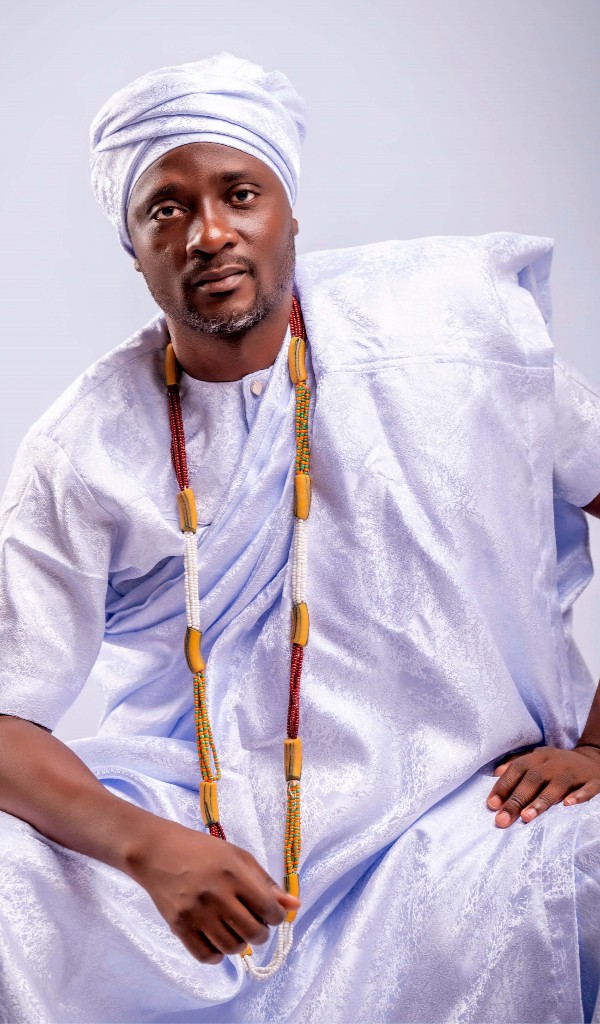
Thotho Sao is the visionary guide and spiritual leader of Fa Safia Foundation. His work embodies the restoration of ancestral wisdom, the path of initiation, and the mission of awakening souls to their divine blueprint.
To explore his life journey, teachings, and spiritual mandate in greater detail, please read his biography below.
Who is Thotho Sao?
Lineage & Mystical Heritage
The story of Thotho Sao Kotogbor begins with his great-great-grandfather, Torgbui Gadzo (Gadzedzo), who first received and safeguarded the family’s sacred wisdom of Fa. The knowledge passed to Torgbui Kotogbor, and then to his son Torgbui Miheso, a powerful initiate who entered deeply into the mysteries of Fa. He became widely known for his mastery of spiritual practice and his ability to guide those who came to him for help.
Before his passing, Miheso entrusted his son, Johnny Dartey Kotogbor, with preserving the family’s spiritual knowledge, declaring he would soon return to continue the work. That vow became a prophecy fulfilled in the person of Thotho Sao.
Thotho Sao’s heritage, then, is not simply bloodline. It is cosmic inheritance. He carries the legacy of Miheso, embodying the bridge between ancestral wisdom and the present.
Childhood & Near-Death Experience
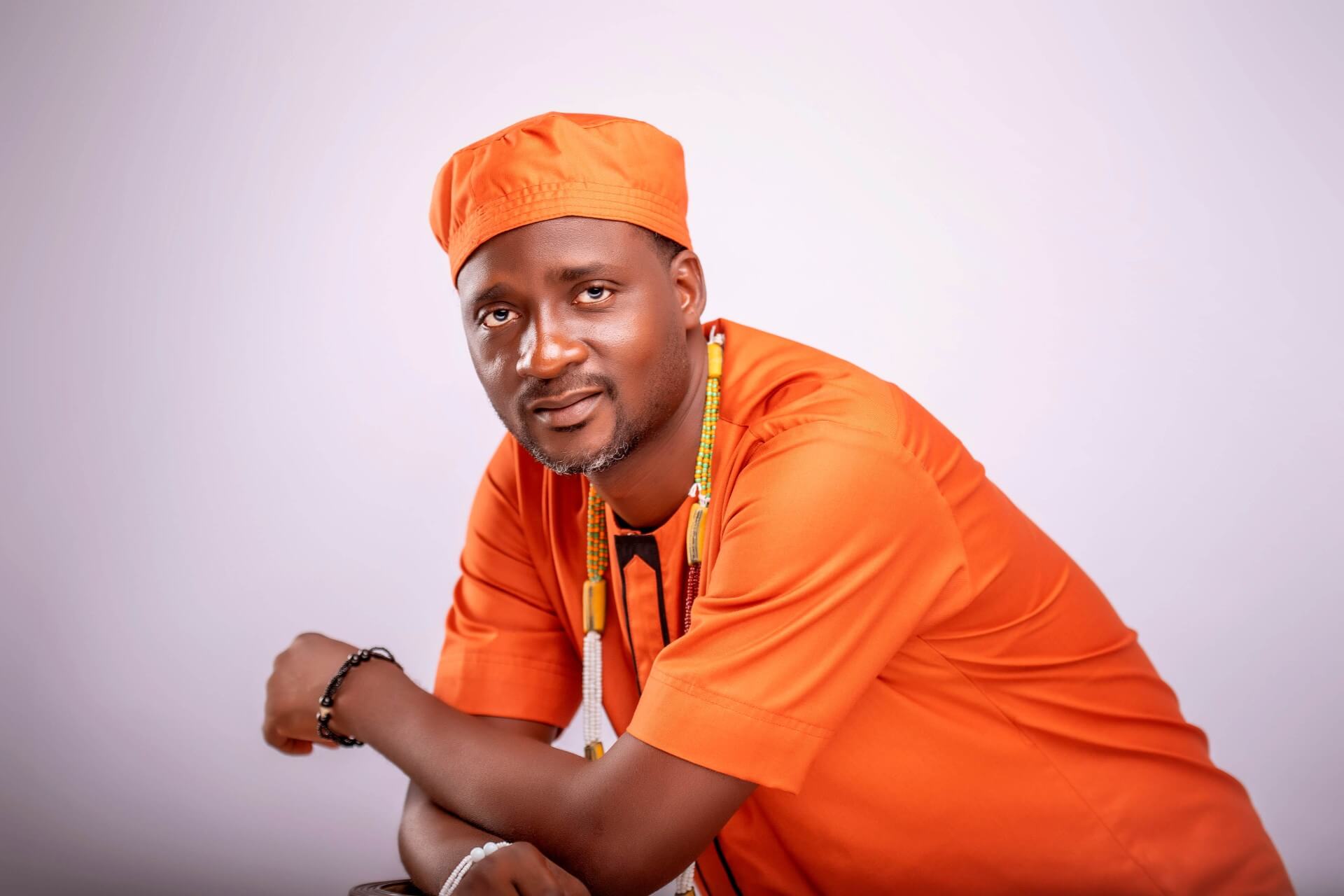
Born in the Volta Region of Ghana, Thotho Sao carried a calm, mysterious presence even as a young child. At age five, he was struck by a severe illness that no medicine, cleansing, or traditional healing could reach. After days of agony, his body grew still, and he was declared dead. In Aflao, where the family lived, burial arrangements were already underway.
At that moment, his maternal grandfather, Torgbui Sofahu Dorkenoo, returned from Ivory Coast, where he had been conducting Fa initiations. Refusing a hasty burial, he demanded a Fa divination first. The code that appeared was Kporli Dzongbe (Gbemedzi), the same code under which the ancestor Torgbui Miheso had been initiated. Recognizing this, Torgbui Sofahu exclaimed: “Miheso Lakpatsa! Are you the one behaving like this?”
Sacred rites, chants, and invocations were performed immediately. The boy who had been pronounced dead stirred, came alive, and began to cry. It was recognized in that moment as more than a survival. It was a spiritual crossing, confirming Thotho Sao as the living continuation of Torgbui Miheso, marked from then on as a chosen vessel of ancestral wisdom.

Early Awakening & Training
Following the miracle in Kedzi, Thotho Sao began experiencing a steady stream of visions and other-worldly encounters. At school he often seemed absent, his lessons interrupted by inward journeys to planetary realms, to states of stillness he described as the “creative seeds,” so profound they had no image to give, only silence. At times he had to be found and brought home after such episodes.
These experiences could not be contained by casual family ritual and demanded formal grounding. Thotho Sao was retaken through Fa initiation by a cohort of respected priests: Raba Marshall Kuatsikor, Assistant Raba Efo John Kuatsikor, and Dzogbana Amuzu Kuatsikor.
He went through rigorous training: strict rules on diet, speech, sight, and behavior, and prolonged practice of meditative sound formulas, all aimed at teaching restraint so that inner power could deepen without distraction. As part of this discipline, he embraced celibacy for over two decades as a practice of solitude, self-mastery, and devotion to his calling.
By the end of this period, Thotho Sao was no longer a boy with strange experiences. He was a disciplined initiate, prepared to step into the responsibilities that would follow.

Mission & Philosophy
At the center of Thotho Sao’s teaching stands Sa, the principle of balance, justice, and sound that holds creation together. He teaches that the universe is a living entity, not a lifeless mechanism, and that “everything that exists in man exists in the cosmos, and everything that exists in the cosmos exists in man.” Self-discovery and cosmic discovery, in his view, are one pursuit.
Central to this philosophy is lineage: every person carries the seed of their family and ancestors, and to honor that lineage is to stay connected to the creative force behind one’s own being. He also draws a sharp line between living and existing: those unaware of the deeper laws that sustain them merely live, while those who awaken to their nature and align with those laws truly exist. “Those who live may be forgotten,” he says, “but those who exist can never be erased.”
This extends to leadership: a true leader disciplines himself first, and helps others solve their own problems rather than creating dependency. And it extends to his view of knowledge itself. He holds that much of what modern science, medicine, and engineering claim as discovery already has its roots in Fa, borrowed “wittingly or unwittingly,” and often misapplied because it was taken without respect for its source.
It was from this conviction that Fa Safia Foundation was born, not simply an institution, but what he calls a cosmic assignment: to return the African child, and ultimately all of humanity, to the source of their existence through schools, clinics, and centers of learning that unite spiritual, physical, and cosmic realities.
The Forthcoming Book & the Original Language.
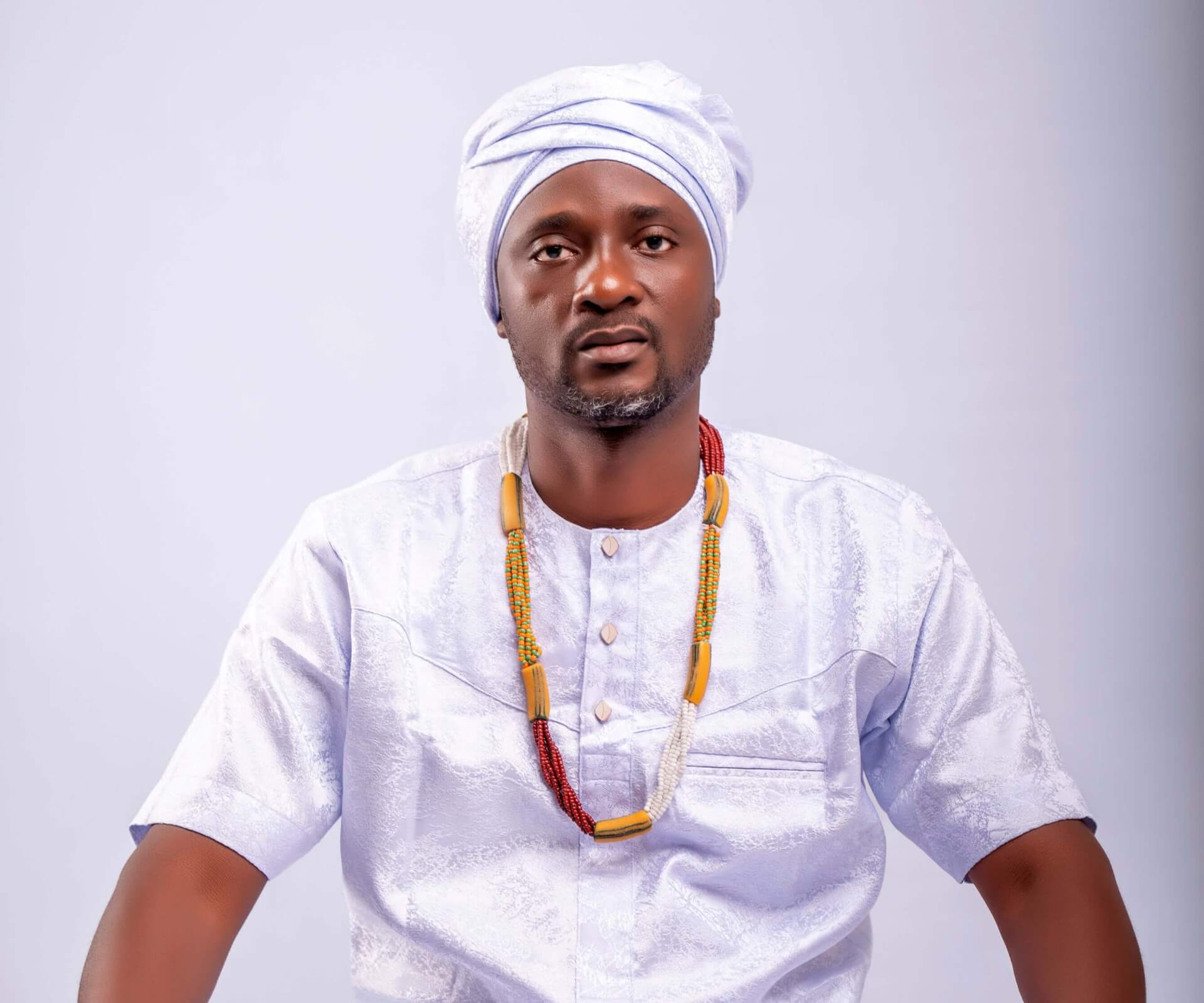
Thotho Sao’s forthcoming book is described as a compendium of spiritual science, ancestral wisdom, and universal truth, spanning anatomy, physics, philosophy, cosmology, and engineering, written to bridge mainstream science with what has been safeguarded in Fa. It addresses “Gbadu” as “the exploded universe” (what science calls the Big Bang), presenting creation not as random but as an ordered unfolding governed by Sa.
The book also carries the first disciplined revelations of what he calls the original language of the universe, a primordial, sacred phonetic system once guarded by high-ranking adepts (Raba) because its syllables were believed not merely to describe reality but to shape it. Long fragmented by history, it is taught as the root from which human languages grew, to be revealed responsibly and only to those committed to discipline and service.

Challenges & Opposition
Thotho Sao’s path was not without resistance. As a young man he actively avoided tradition and ritual, a fact his own mother still marvels at, given who he has since become. While pursuing a career in engineering, he invested in contracts worth thousands of dollars that repeatedly collapsed, losses that pointed him away from ordinary ambition and toward a different calling.
His search for truth took him through various spiritual centers and practices that ultimately felt disconnected from his own roots. At points, when he tried to speak languages other than his native Ewe, he bit his tongue severely, experienced as a sign that his destiny was bound to Ewe as the language through which ancestral wisdom would flow. He also faced accusations from family and clients of “worshipping idols.” He bore this with patience, understanding it as the resistance that has always met those carrying new light into old misunderstanding.
Legacy
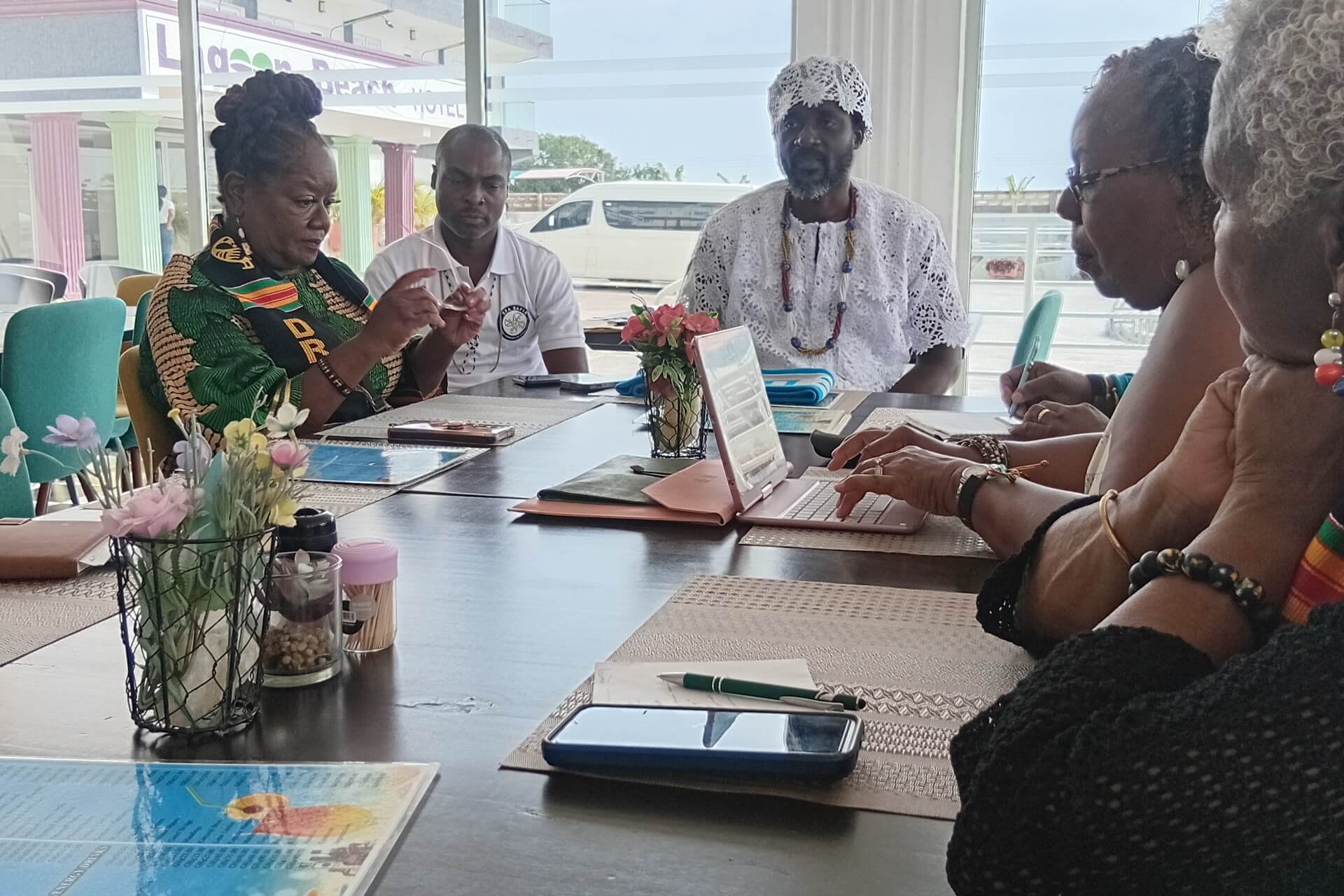
Through Fa Safia Foundation and his forthcoming writings, Thotho Sao has set in motion what he sees as a spiritual renaissance, reclaiming the inheritance of Fa for a generation seeking identity and liberation. His initiates and students are not passive listeners but active bearers of the tradition, extending its reach beyond the Foundation itself.
For him, legacy is not measured in monuments or titles, but in lives transformed and in the sacred knowledge preserved and carried forward: Fa, reawakened, guiding generations still to come.


